

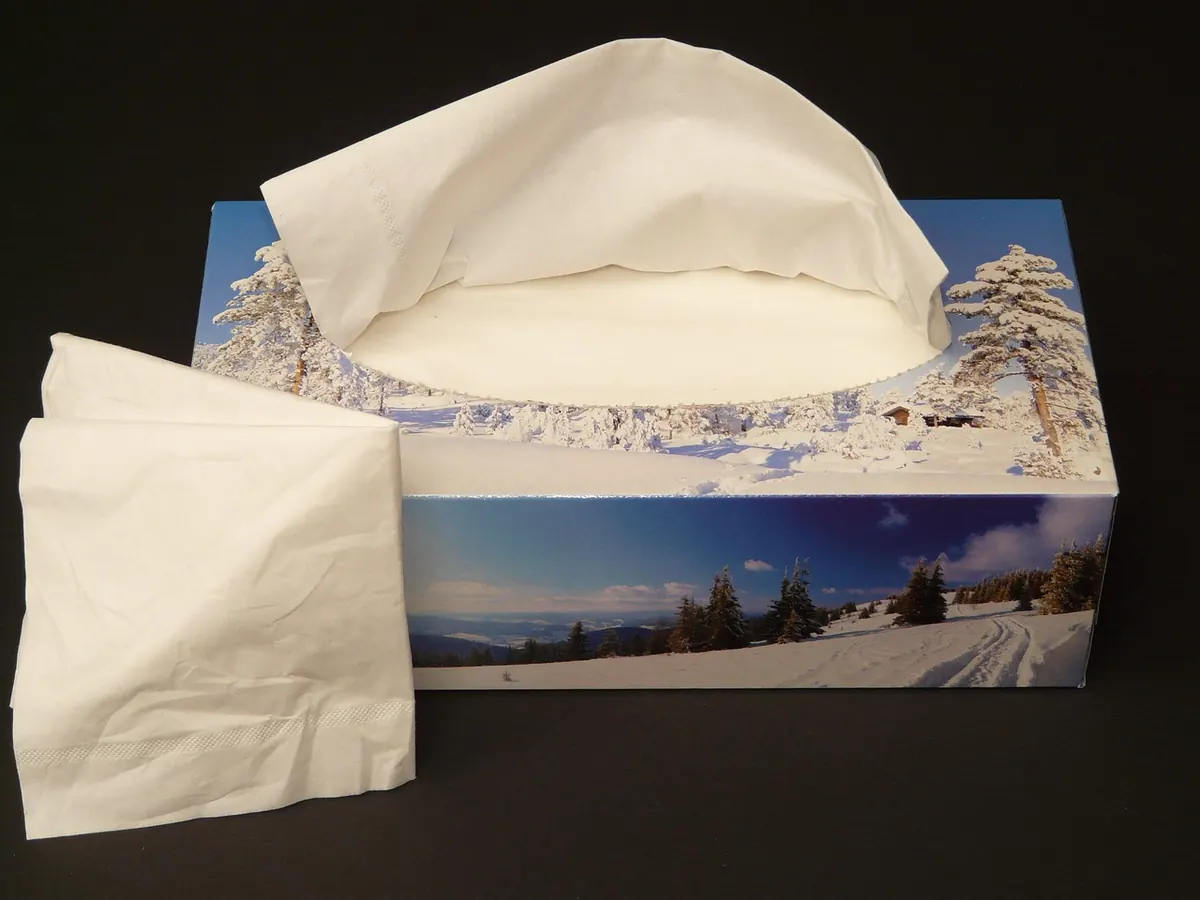
A sneeze lasts less than a second, but the silence after it can feel much longer. In one room, someone says “Bless you.” In another, “Salute.” In another, nobody says anything, and the sneezer simply reaches for a tissue. The reflex is universal; the script around it is not. Sneeze etiquette is one of the small, revealing ways cultures answer a question we rarely ask out loud: when something involuntary happens in public, what do we owe each other?
The Social Job of a Sneeze Blessing
A sneeze is a sudden, noisy event. It interrupts conversation, draws attention, and sometimes sends droplets into the air. A short phrase does several jobs at once: it acknowledges the disruption, wishes the person well, and gives everyone a polite next move. The words vary, but the impulse is recognizable. Someone sneezes; someone else says something kind; the sneezer says thanks; the room returns to normal. That sequence is not universal, though. In some places the kind thing is silence, or a concerned look, or a question. Learning the local script is less about superstition and more about reading the room.
Where “Bless You” Comes From
The English phrase has several popular origin stories, and no single one settles the matter. One old belief held that a sneeze could let the soul slip out of the body, or that evil spirits could rush in during the open moment. Another explanation points to the heart: a sneeze was once thought to stop it briefly, so a blessing was a small prayer for continued life. A third story places “God bless you” in plague times, when sneezing could be an early sign of illness and a blessing was offered as protection. The phrase is often credited to Pope Gregory I, though the details are more legend than clean record.
What is clear is that “God bless you” shortened to “bless you” and became ordinary in English-speaking places. It is said after one sneeze, often after several, and sometimes with a smile when the sneeze is loud enough to startle the dog. It is polite, but it is not neutral: it carries a religious trace, even for people who are not religious. That is one reason “Gesundheit” has travelled into English. It means “health” in German and lets the speaker wish well without invoking God.
The Health Wishes: Europe and Beyond
Many languages skip the blessing and wish health instead. The logic is practical: a sneeze can be a sign of a cold, an allergy, or dust, so the phrase becomes a small “take care.”
- German: Gesundheit (health)
- Spanish: ¡Salud! (health)
- Italian: Salute! (health)
- Portuguese: Saúde! (health)
- Dutch: Gezondheid (health)
- Polish: Na zdrowie (to health)
- Russian: Bud zdorov (be healthy; plural Budte zdorovy)
- Hebrew: Labriut (to health)
- Greek: Geitses (healths)
- Scandinavian languages: Prosit, from Latin for “may it benefit you”
The reply is usually a simple thank you: danke, gracias, grazie, obrigado/obrigada, dank je, dzięki, spasibo, toda, efharisto, tack. None of these phrases requires a long explanation, and that is the point. They are social WD-40: a tiny phrase that lets a small disruption pass.
French adds a playful ladder. The first sneeze gets “à tes souhaits” (to your wishes) or the formal “à vos souhaits.” A second sneeze can get “à tes amours” (to your loves). A third may draw “qu’ils durent toujours” (may they last forever). This is charming among friends and risky with strangers. If you are visiting and only remember one, use the formal “à vos souhaits” and leave the romantic sequel alone.
Mercy, Long Life, and the Religious Exchange
In Arabic-speaking and Muslim contexts, a sneeze can open a short religious exchange. The sneezer says “Alhamdulillah” (praise be to God). The person nearby replies “Yarhamuk Allah” (may Allah have mercy on you). The sneezer then answers “Yahdikum Allah wa yuslihu baalakum” (may Allah guide you and set your affairs right). This is not a casual “bless you” with a different label; it is a compact act of faith and courtesy. A visitor who is not Muslim should not lead the exchange, but can follow the local cue or simply offer a warm nod if unsure. In many Muslim families, the custom is taught early, and skipping it is more noticeable than getting the wording slightly wrong.
Other cultures wish life rather than health. In Turkish, “Çok yaşa” means “live long.” The traditional reply is “Sen de gör” (may you see it too) or “Hep beraber” (all together). In Chinese, “百岁” (bai sui) or “长命百岁” (long life to a hundred) is a common response in many Mandarin-speaking settings. In Hindi-speaking contexts, “Jite raho” (may you live long) is used in some families and regions. These phrases do similar social work: they turn a bodily interruption into a small gift of goodwill.
The Places Where Nothing Is Said
Not every culture treats a sneeze as a cue for words. In Japan, many people say nothing, or ask “Daijoubu?” (Are you okay?) if the sneeze sounds violent. A sneeze is sometimes linked to the idea that someone is talking about you, which is a superstition rather than a rule. In Korea, similar talk-about-you folklore exists, and a standard blessing is not part of everyday etiquette. Silence here is not coldness. It is simply a different script: the sneeze is not treated as a social event that needs a verbal reply.
This is useful to remember when travelling or working in mixed company. A missing “bless you” can feel like a small slight to someone used to hearing it. It usually is not. The person may be following a local norm, concentrating, or simply not treating a sneeze as a conversational opening.
How to Handle a Sneeze Anywhere
If you want to be courteous without guessing wrong, keep the response small and local. Here is a practical order of operations:
- Watch first. Notice what people around you say, if anything. In a new place, one silent sneeze tells you more than a phrasebook.
- Default to health if you do not know the custom. A simple “Salute,” “Salud,” or “Gesundheit” is understood in many places, and a friendly tone covers a lot.
- Match the register. Use the formal French “à vos souhaits” with strangers. Use the Arabic exchange only if you know it and the setting invites it. Do not turn a stranger’s sneeze into a theology quiz.
- Say thank you when someone blesses you. A smile and a nod work when you do not share a language.
- Do not bless every sneeze. In English, one “bless you” is enough; a second can be kind, a fifth becomes a comedy routine. If someone sneezes repeatedly, “Are you all right?” may be more useful than another blessing.
- Carry a tissue. The most cross-culturally welcome move is to cover the sneeze and wash your hands. Etiquette starts with not sharing the spray.
The Small Practical Closing
A sneeze is involuntary; the response is not. “Bless you” is one option among many, shaped by old fears about the soul, by plague-era prayers, and by the simpler wish that a person stay well. The next time you hear a sneeze in a meeting, a train carriage, or a friend’s kitchen, you can choose the local phrase, a neutral “Gesundheit,” or a quiet moment of nothing at all. The goal is not to perform the correct ritual every time. It is to make the room a little easier for the person who just sneezed.
If sneezing becomes persistent, painful, or comes with fever, breathlessness, or other concerning symptoms, ask a clinician for advice. That is one piece of etiquette no phrase can replace.
Photo: Hans / Pixabay